
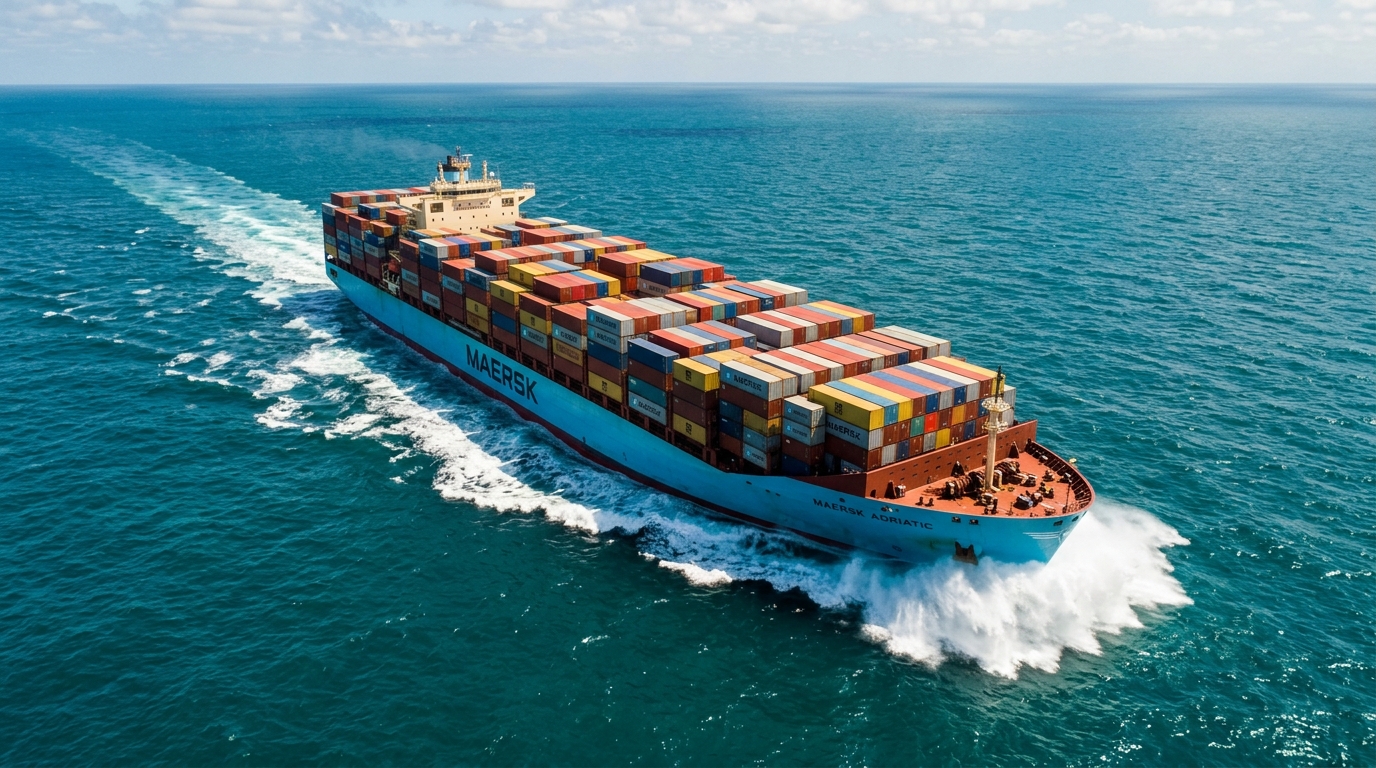
In agricultural commodity exporting, freight and multimodal logistics often represent between 12% and 22% of the total CIF landed cost. For international wholesale buyers handling bulk pulses, chickpeas, maize, and millets, optimizing container stuffing and ocean carrier routing can yield significant margins.
1. 20-Foot vs 40-Foot Heavy-Tested Containers
Because agricultural food grains and pulses possess high bulk density (typically 750 to 850 kg/m³), weight limits are reached long before volumetric cubic capacity. Hence, 20-foot Heavy Tested (HT) containers rated for 28 metric tonnes payload are the industry benchmark:
- Chickpeas (Kabuli 12mm / 9mm): Standard stuffing of 25 Metric Tonnes per 20ft FCL in 25kg or 50kg PP bags.
- Yellow Maize & Feed Corn: 26 Metric Tonnes per 20ft FCL using bulk container sea-bulk liners with pneumatic blower loading.
- Toor & Moong Dal: 24 to 25 Metric Tonnes per 20ft FCL strapped onto heat-treated ISPM-15 wooden pallets.
2. Ocean Carrier Transit Time & Routing Matrix
Selecting the optimal maritime route drastically reduces port demurrage and spoilage risk. For Middle East shipments originating from JNPT (Nhava Sheva) or Mundra Port:
- To Jebel Ali (UAE): Direct sailing transit time of 3 to 4 days.
- To Dammam / Jeddah (Saudi Arabia): Transit time of 6 to 9 days.
- To Chittagong (Bangladesh): Feeder vessel transit of 5 to 7 days from Haldia / Kolkata port.
3. Preventing Moisture Condensation & Container Rain
During the voyage across varying tropical temperatures, condensation inside steel ocean containers (“container rain”) poses severe risk to dry cargo. We implement high-absorption calcium chloride desiccant poles (absorbing up to 300% of dry weight) alongside Kraft paper thermal insulation liners to guarantee moisture equilibrium under 13.5%.
Need Official Proforma Invoices or Phytosanitary Specs?
Connect with our export trade desk for direct container quotes (FOB/CIF), lab test certifications (SGS/Geo-Chem), and custom private labeling specifications.